Confidence English Program
Public Speaking for Children
Their English Journey Starts Here.
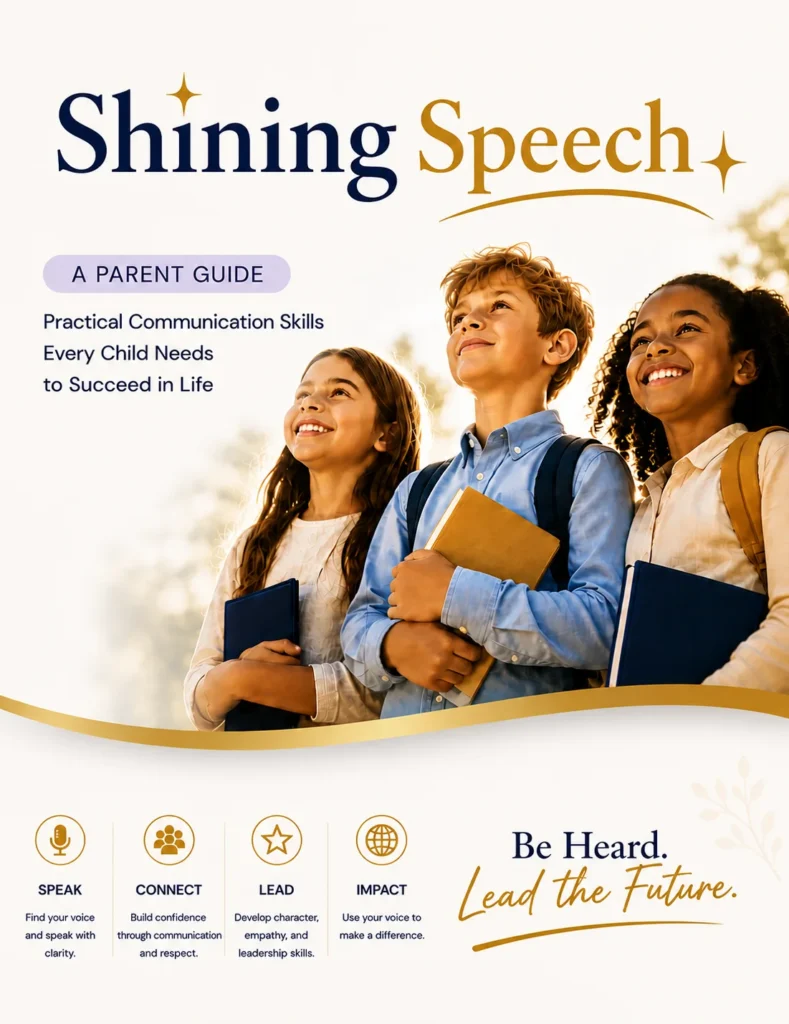
Shining Speech builds English, public speaking, bilingual confidence, critical thinking and real-world communication for children aged 4–17, including bilingual and English as a Second Language learners.
1:1
safe private start
1:2
small speaking groups
Live
public speaking seminars
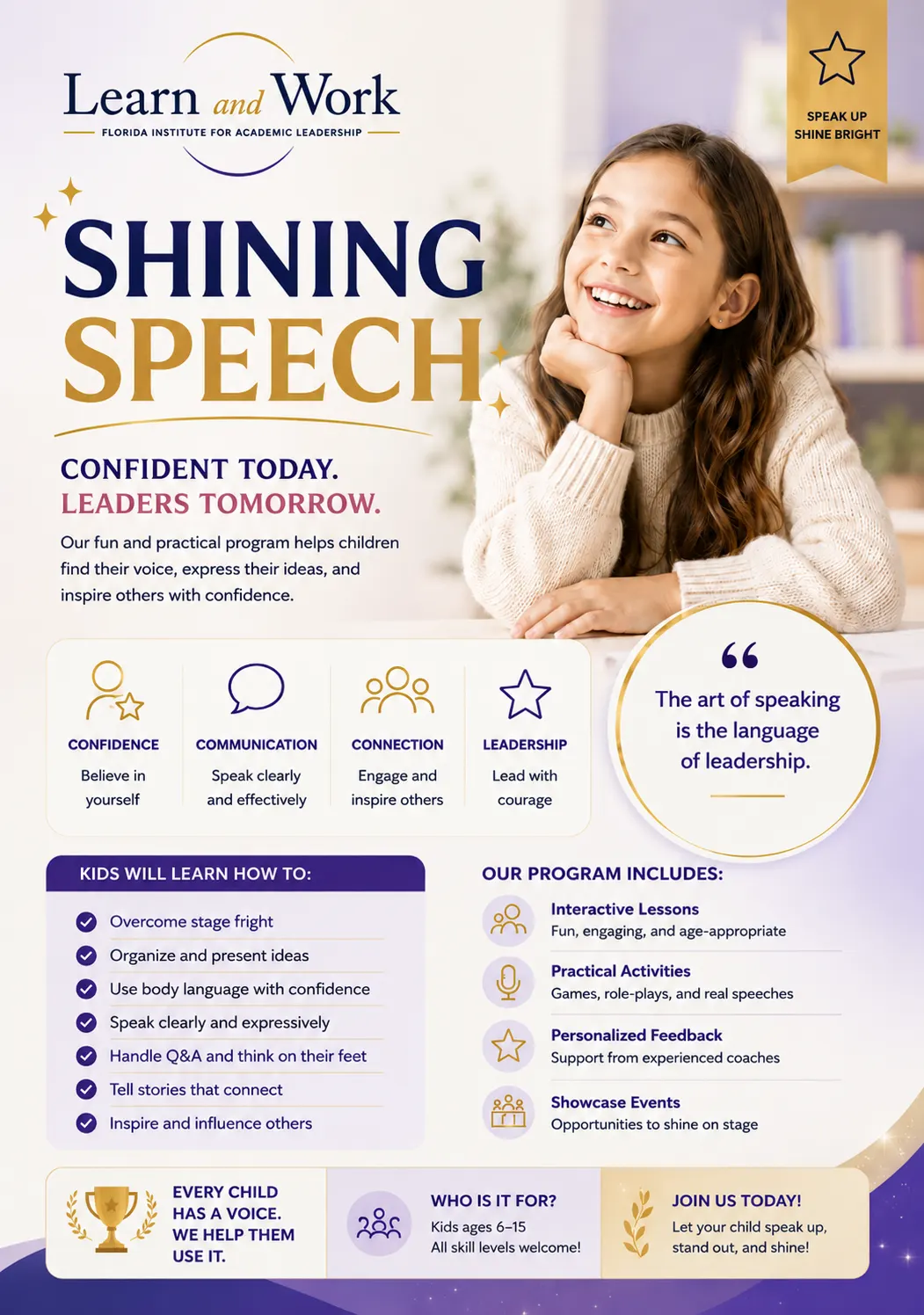
Shining Speech™ is a proprietary AI-supported educational and workforce development system. Trademark registered with the USPTO. All methodologies, materials, and system components are protected under applicable intellectual property law.
Bilingualism is more than double communication. It is
mental architecture.
Neurological research shows that children managing two language systems develop stronger executive function, deeper contextual awareness, and greater mental flexibility — advantages that transfer across every area of life.
+4
year creativity advantage
2×
stronger selective attention in bilingual children
80%+
EU primary school students learning English from an early age
Switch faster
Switching between language systems trains the brain to manage competing demands, filter irrelevant information, and shift attention rapidly — skills at the core of academic success.
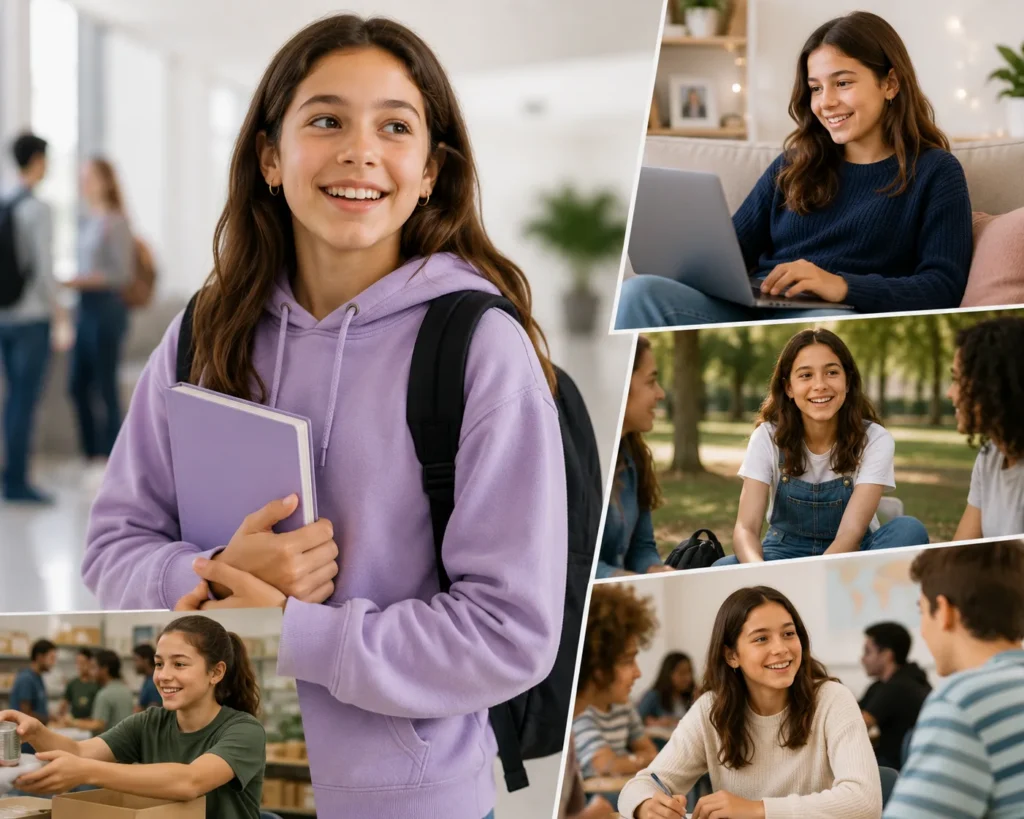
Belong in more places
When bilingualism is properly supported, children develop a stronger, more integrated sense of identity. They feel capable of belonging in multiple contexts simultaneously.
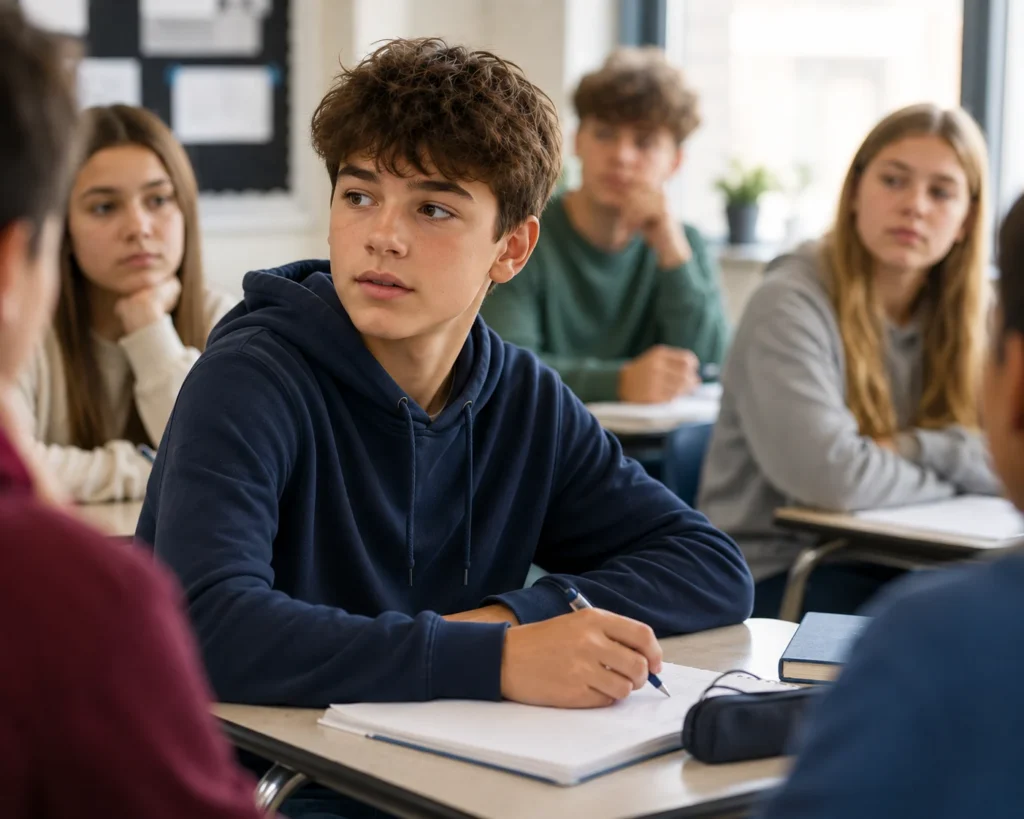
Read the room
Bilingual children naturally develop greater empathy for different perspectives, communication styles, and cultural norms — a critical advantage in a globalised world.
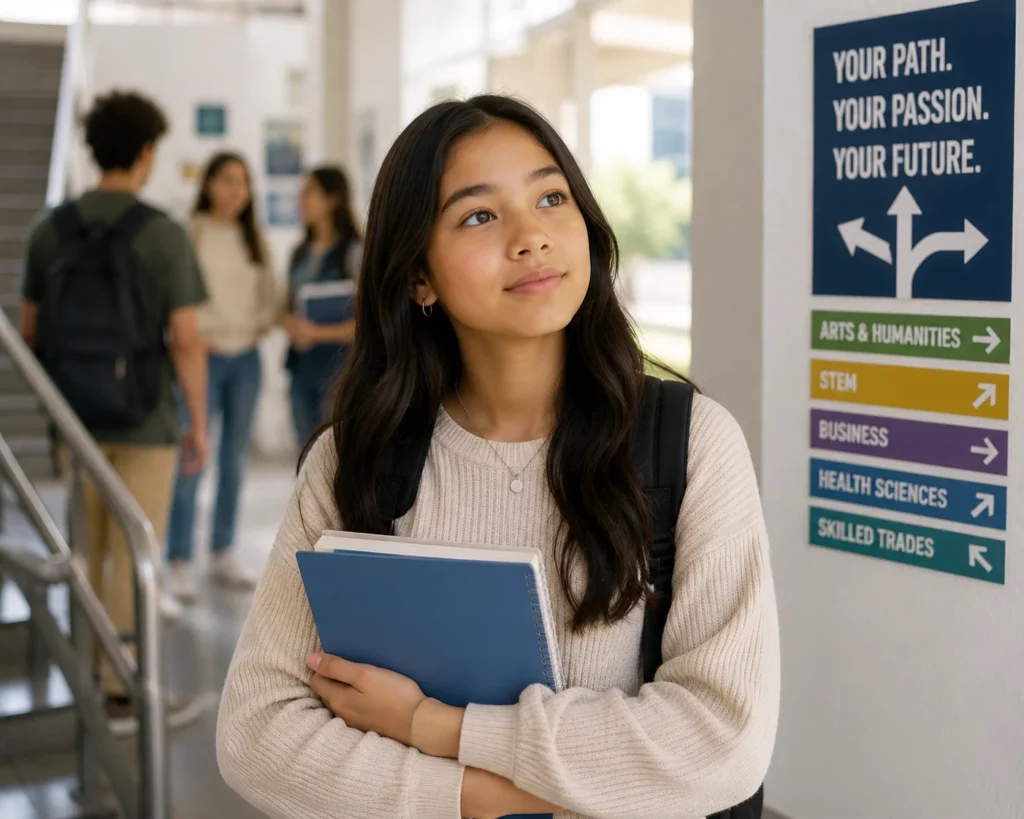
Access more pathways
Students with strong bilingual foundations access higher-level academic content in both languages — opening international university pathways, scholarship eligibility, and global career options.
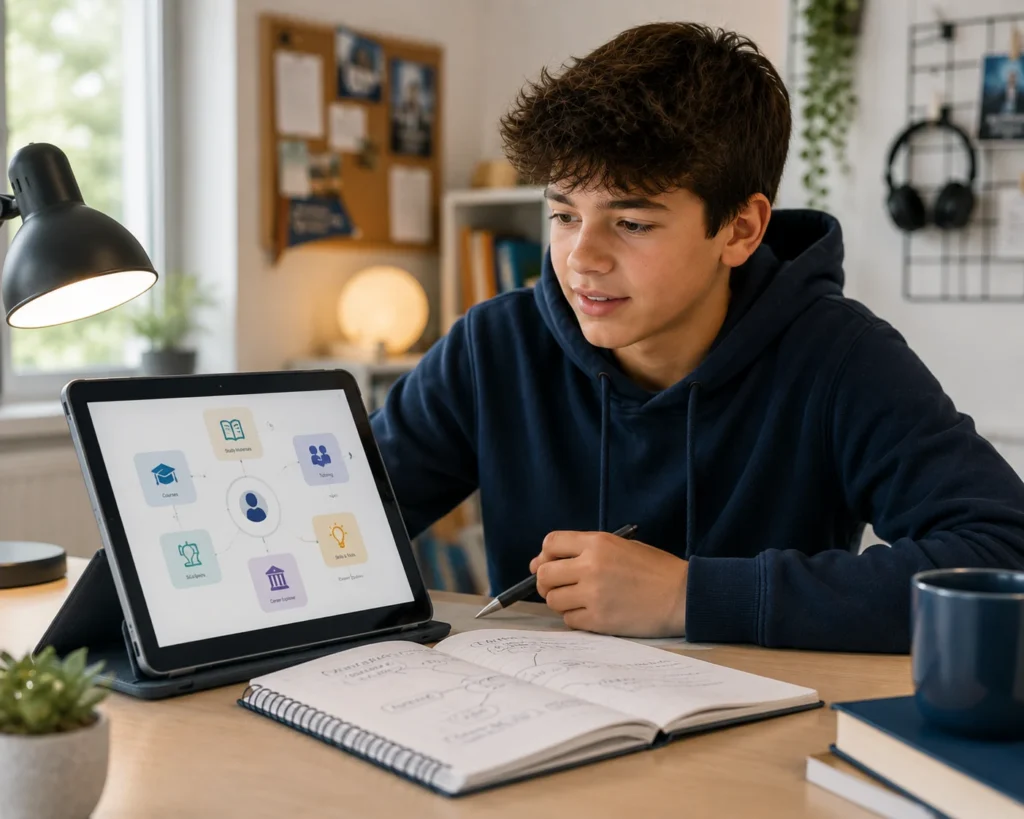
One unified resource
Our curriculum uses the translanguaging approach inspired by García & Li Wei — treating both languages as one unified cognitive resource, not competing systems.

Shape the world
English is the language of international business, science, diplomacy, and culture. Bilingual children do not just participate in the world. They shape it.

Public Speaking for Shy Children
Help your child speak with confidence
We help shy children speak clearly, grow confidently, and step into their future without fear. From first words to real careers, we guide them all the way to the door of opportunity.
The bilingual brain is not carrying extra weight.
It is training with extra gravity.
Every time a bilingual child chooses which language to speak, their brain performs an executive function exercise. This constant, invisible cognitive workout produces measurable advantages across every domain — not just language.

Enhanced Executive Function
Bilingual children consistently outperform monolinguals in tasks requiring attention switching, inhibitory control, and working memory.
Delayed Cognitive Decline
Lifelong bilingualism delays dementia symptoms by an average of 4.5 years compared to monolinguals. The advantage begins in childhood.
Metalinguistic Awareness
Bilingual children understand language as a system earlier and more deeply — supporting reading, writing and analytical thinking.
The Threshold Theory
Cognitive advantages emerge when children reach sufficient competence in both languages. Our program is designed to help children cross that threshold safely.
In a world where artificial intelligence can generate text, translate languages and draft essays in seconds, the irreplaceable skills are human: critical thinking, verbal presence, emotional intelligence and communication with conviction.
AI does not reward children who know the answers. It rewards those who ask the right questions.
Question the answer
Evaluate information, identify assumptions, construct arguments and change your mind when evidence demands it through Socratic seminars and debate.
Make your message land
Express complex ideas clearly, adapt to an audience, use timing, presence and confidence to hold the floor.
Speak when it matters
Presenting while nervous and responding in real time are rehearsed in safe environments before children meet real ones.
Read, write, cite
Students practice deeper reading, structured writing, evidence, source awareness and original analysis.
Speak for others
Students develop the ability to speak not only for themselves, but for groups, causes and communities they may one day lead.
Check the source
In an information environment saturated with manipulation, the child who can evaluate a source navigates the world more safely.
AI will not replace your child. But children who use AI wisely will have an advantage over those who do not.
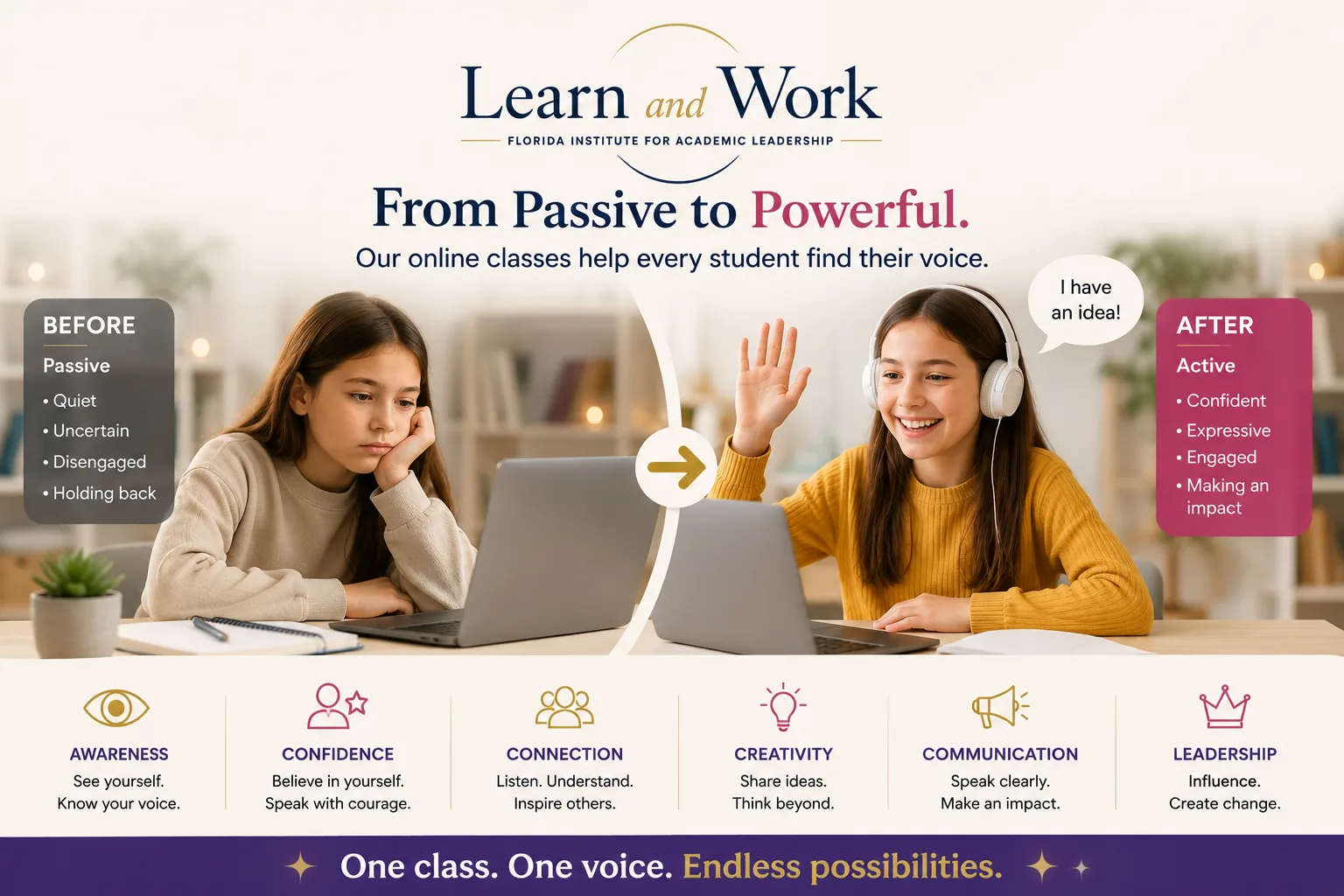
The question is whether your child becomes a passive consumer of generated content or an active, critical, articulate human who uses AI as a tool while bringing what AI cannot: judgment, empathy, presence and the ability to hold a room.
The Passive Child
Consumes. Copies. Submits.
Uses AI to generate answers without understanding them. Cannot explain their own work. Cannot defend a position. Cannot speak in front of others. Technically efficient. Humanly empty.
The Shining Speech Child
Questions. Creates. Communicates.
Uses AI to research, validate and accelerate — but thinks independently, writes with voice, argues with evidence and presents with confidence. This child is irreplaceable.
Every child starts safely. Every child moves at their own pace.
Group classes are not a starting point. They are something your child grows into through confidence, readiness and relational safety.
Private · 1:1
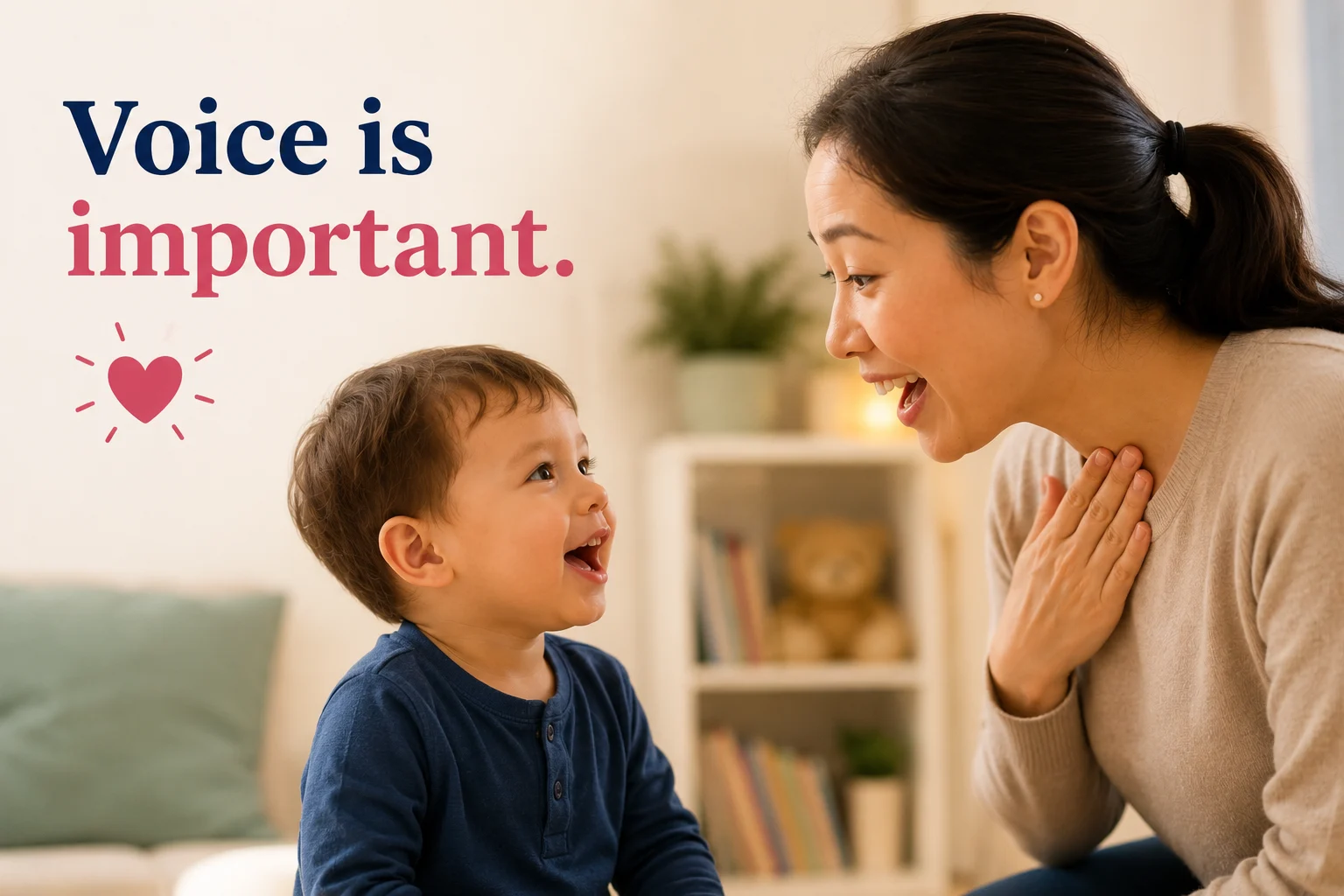
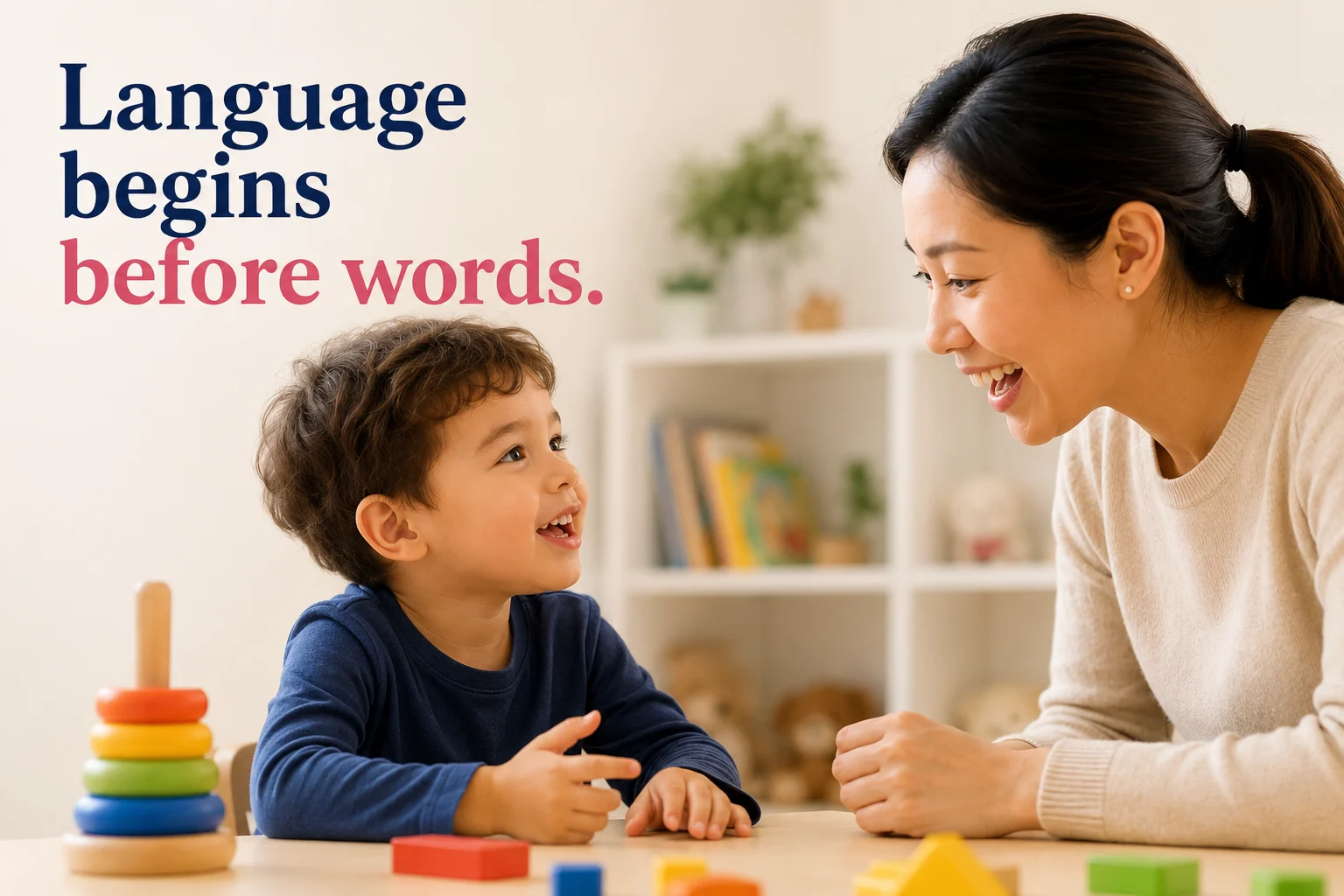
One student, one teacher. No audience. No pressure. A space designed to feel safe enough to speak, make mistakes and find their voice.
On-site or online · Enrolment: September 2026
Semi-private · 1:2
When your child is ready, a second student joins. The first gentle experience of peer presence, introduced intentionally.
Introduced when the teacher sees readiness.
Small Group · Up to 5
A speaking circle, not a classroom. Small enough for every child to be seen and heard, large enough to build audience courage.
Teacher-guided progression.
Seminars · Public Speaking
The visible voice. The child presents, responds, shares opinions and stands in front of others with more emotional steadiness.
Voice becomes presence.
Different ages. Different rooms.
Neurological research shows that children managing two language systems develop stronger executive function, deeper contextual awareness, and greater mental flexibility — advantages that transfer across every area of life.
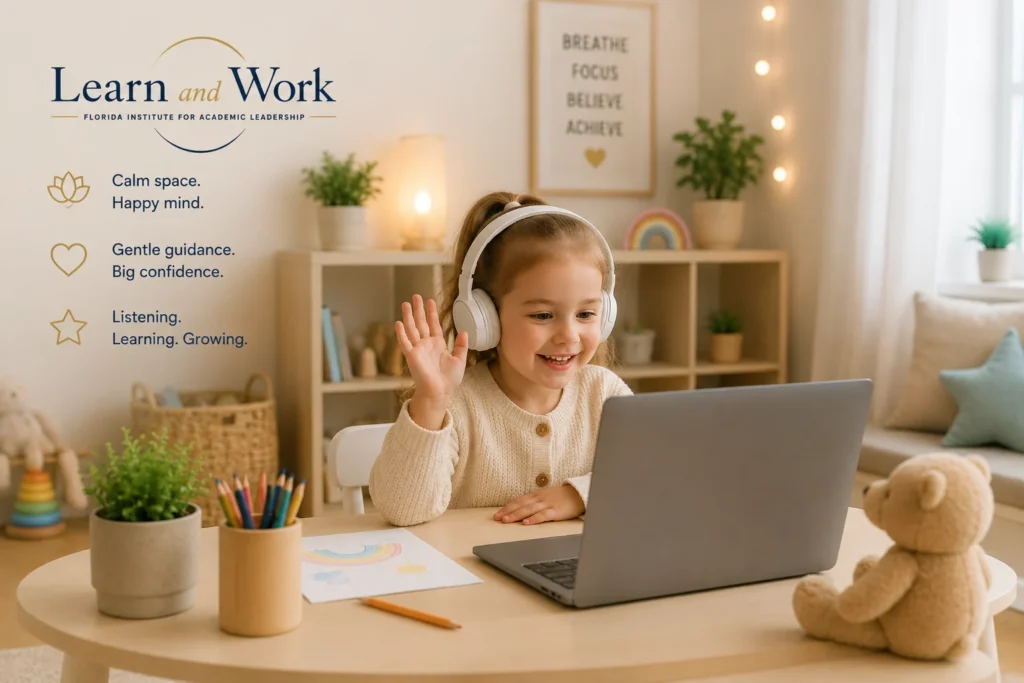
Safety before structure
At this stage, language begins through warmth, rhythm, repetition and emotional connection.
Early language confidence

Voice through guided play
ESL, stories, response, turn-taking and public speaking foundations grow in safe, highly relational formats.
Expression before perfection

Confidence with presence
Older students build opinion, structure, delivery and stronger public-facing confidence.
Ready for seminars and leadership
What children actually build
From silence to voice is not luck. It is design. Children open up when the environment allows it, and that is what we build step by step.
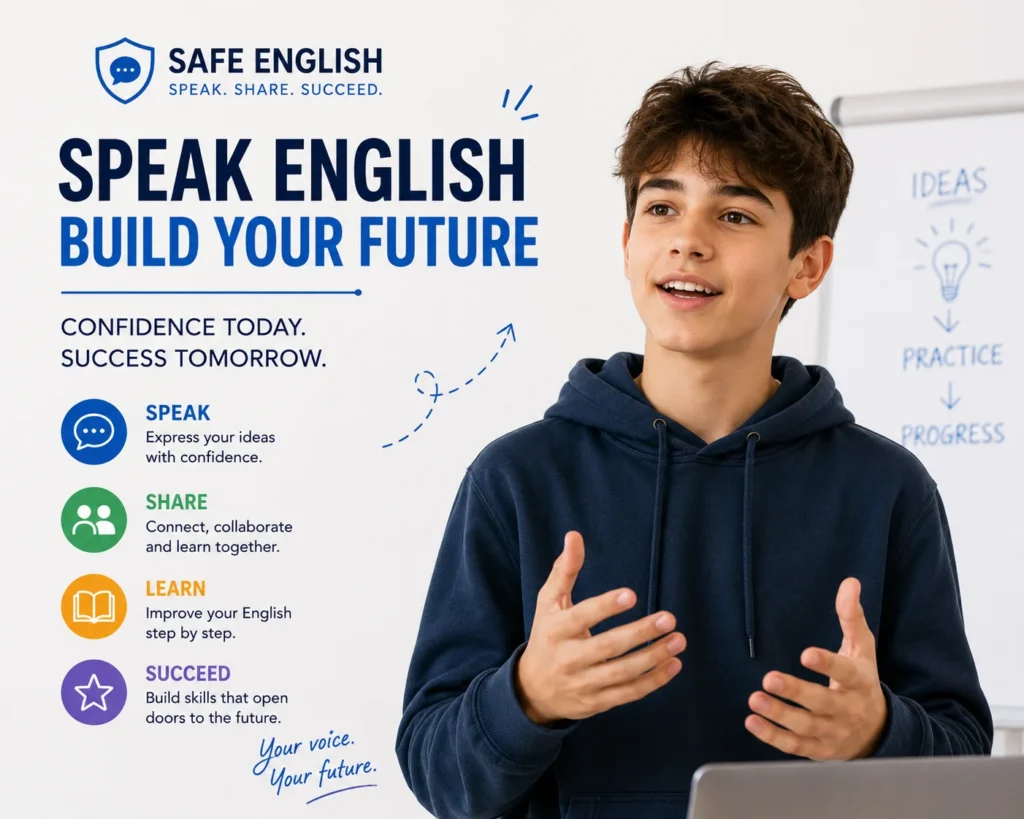
Safe English Voice
Warm routines, confidence, pronunciation, basic expression and emotional safety.
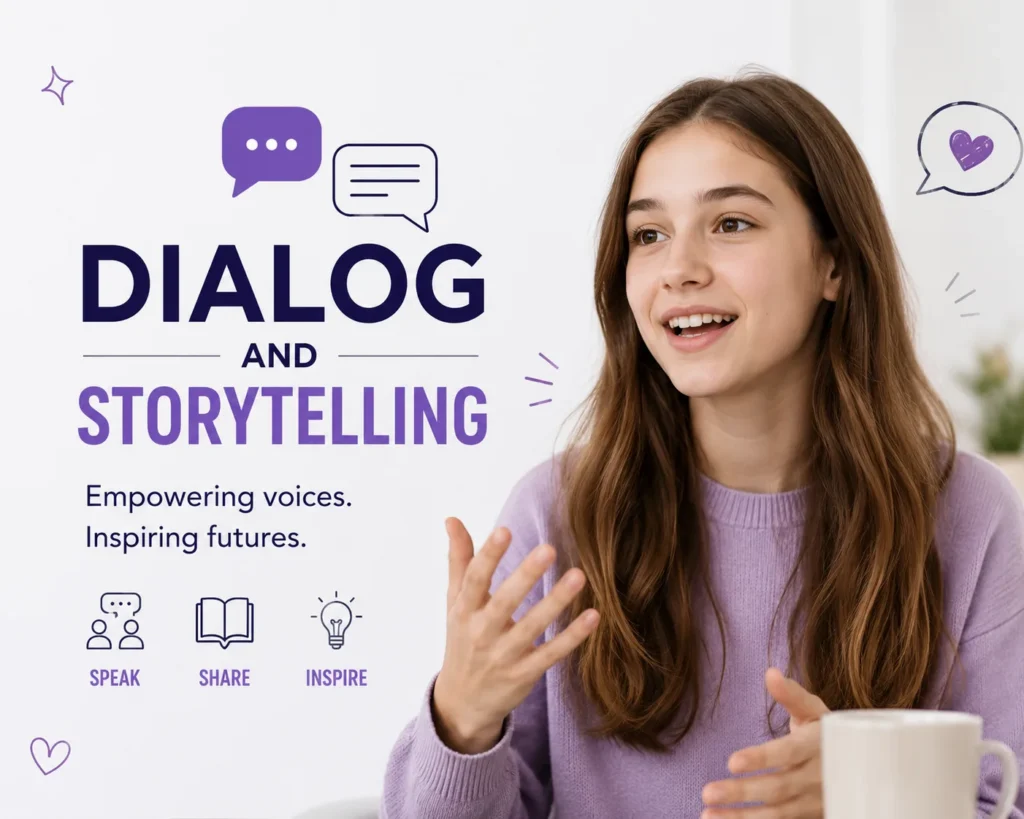
Dialogue & Storytelling
Turn-taking, questions, stories, descriptions, listening and response-building.
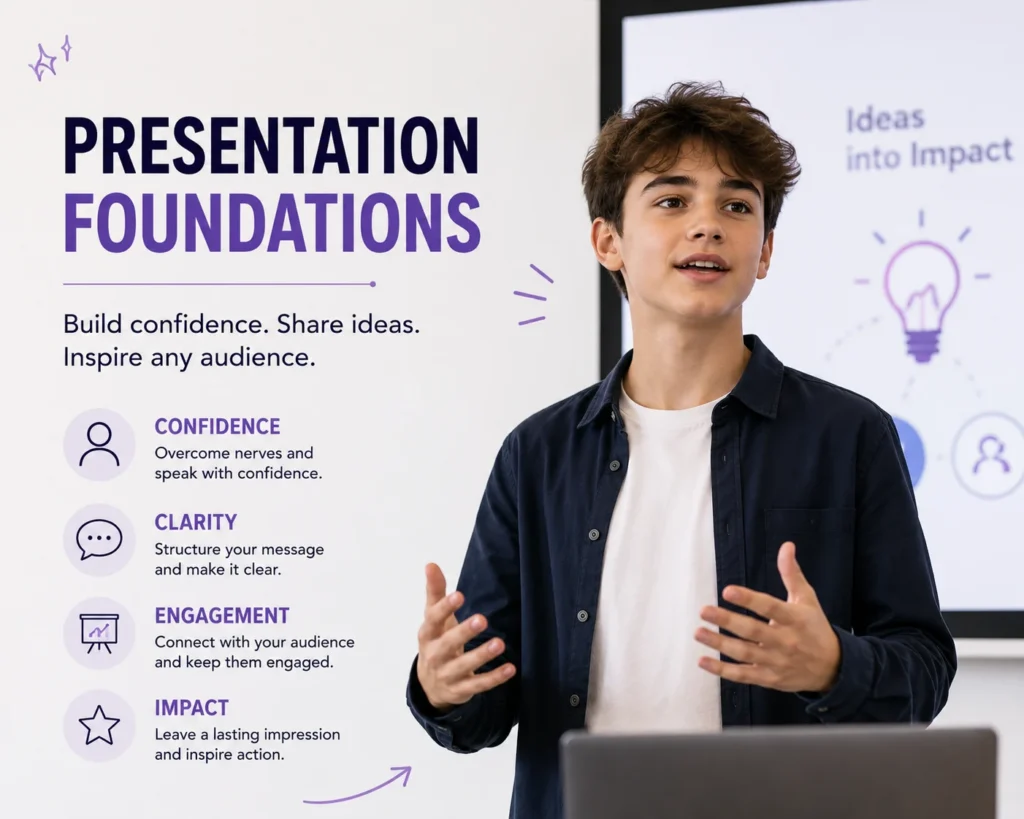
Presentation Foundations
Short speeches, posture, eye contact, structure, pacing and audience awareness.
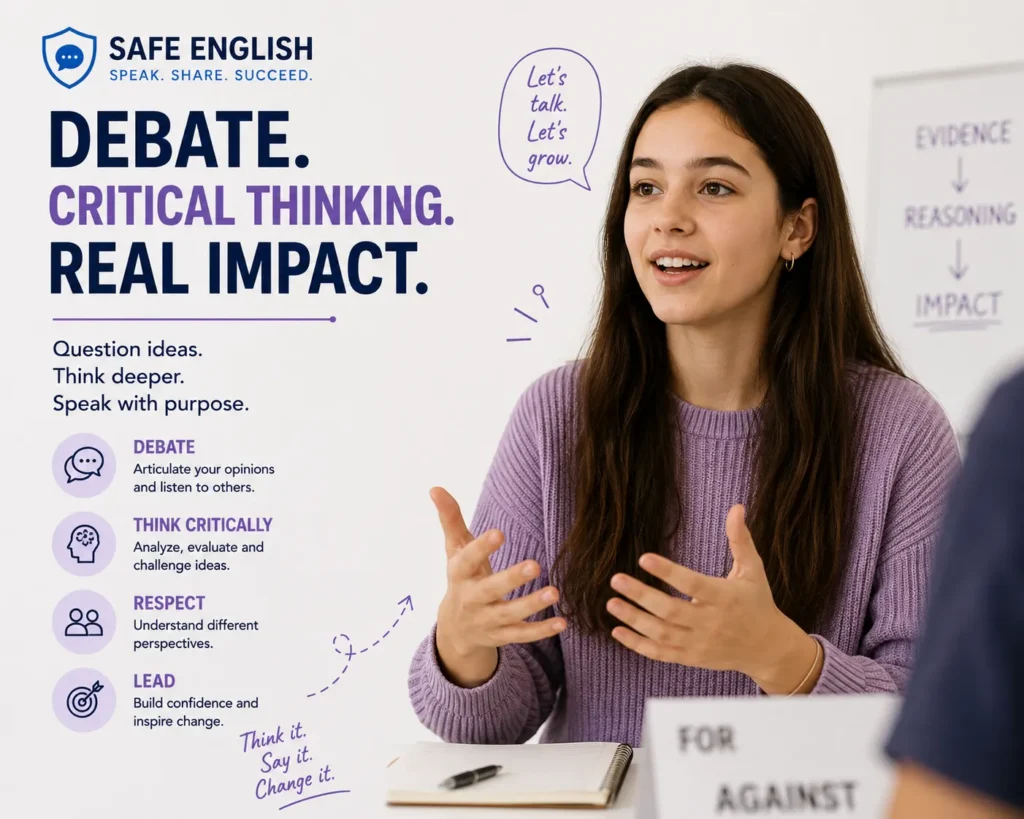
Debate & Critical Thinking
Opinion, reasons, evidence, respectful disagreement and thinking under pressure.
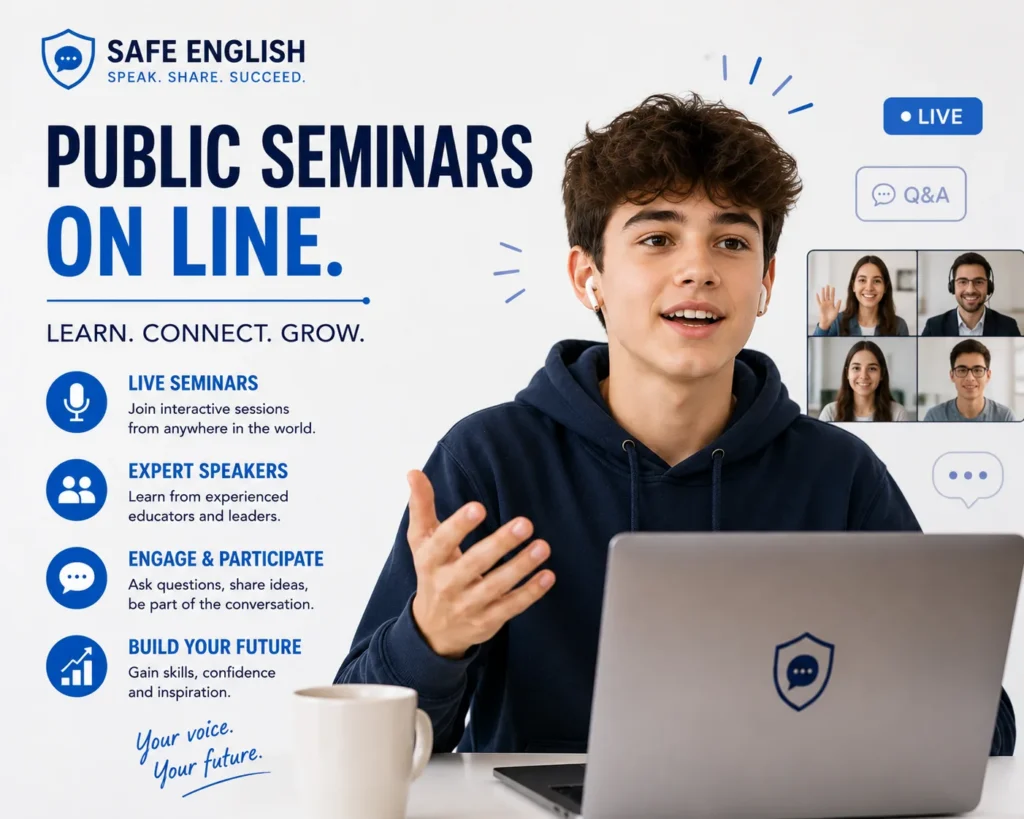
Public Seminars
Live audience practice, Q&A, confidence, self-regulation and real speaking presence.
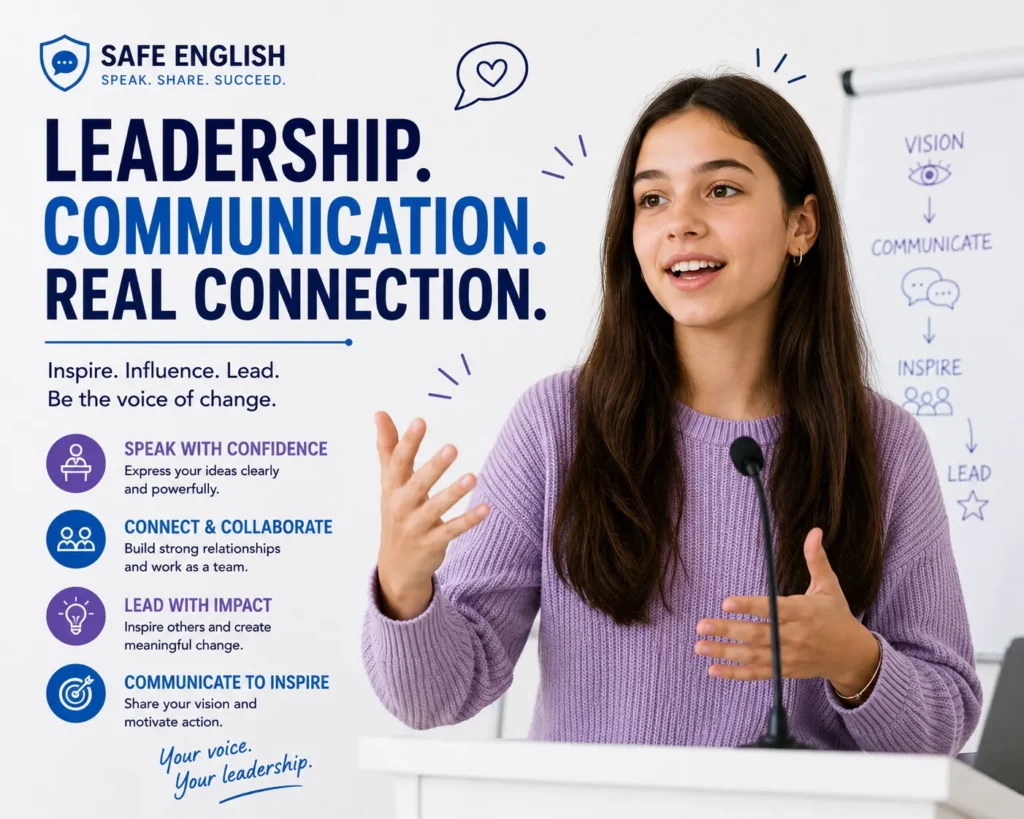
Leadership Communication
Team voice, project presentation, mentoring, civic topics and future readiness.
Trained 18+ student Buddies create a safe, scripted speaking environment.
The Buddy Program is designed to make English feel human, warm and natural. Students aged 18+ receive structured lesson scripts and focus on presence, voice, body language and gentle interaction — almost like guided educational role-play — so the child feels comfortable, seen and safe.
A created scenario. A safe emotional frame. A child learning without pressure.
18+ trained student Buddies
Buddies are older students who support younger learners during guided English interaction. Their role is not to improvise, but to follow a clear educational framework.
Scripted lesson scenarios
Each session is built around a prepared script or scenario, so the child experiences structure, predictability and emotional safety while still speaking naturally.
Body language and presence
Buddies focus on tone of voice, facial expression, movement, listening and warmth — similar to light acting or guided role-play — to help the child relax and engage.
Safe learning through play and dialogue
The child learns English through interaction, not pressure. The scenario is created, the emotions are contained, and the learning feels like a real conversation.

The relocating child. The immigrant family. The bilingual student who goes quiet.
If your child arrived in a new country, a new classroom, or a new language and went silent — that silence is not the problem. The absence of the right environment is. We build that environment. We have done it hundreds of times.
Upload Your Resume
Public speaking becomes normal when it is practised early.
Free seminars give children a gentle first step into real audience experience: listening, answering, presenting, asking questions and discovering that their voice can be visible without being unsafe.
Story Circle
Children practise sharing short stories, reactions and ideas in English.
Mini Debate
Older students learn to give reasons, respond respectfully and think out loud
Show & Tell
Early learners present objects, pictures and simple feelings with support.
Future Leaders
Teens explore confidence, voice, media literacy and leadership presence.
Every journey begins with a single brave word.
Children do not open up randomly. They open up when the environment allows it. We combine safety, evidence-based bilingual method and structured public speaking practice to turn English into presence.

“And, when you want something, all the universe conspires in helping you to achieve it.”
— Paulo Coelho, The Alchemist
Better education, smarter structure
Small groups and the Buddy model reduce the cost of English education while increasing natural speaking time. Children do not only learn from a teacher. They learn from interaction, peer presence, seminars and real communication.
- 1:2 and 1:4 reduce hourly cost
- Seminars add real-world public speaking practice
- Buddy support creates more natural English exposure
- Children practise competence in a living environment
Premium English education with flexible formats.
Placement depends on age, language level, confidence and readiness. Every child begins where they feel safe, then grows toward group confidence and public speaking.
Standard hourly rate
$69 per hour
Available for private, semi-private and small-group formats after placement recommendation.
Ready to help your child speak with confidence?
Apply now for placement in 1:1, 1:2, 1:4 or public seminar tracks. We will recommend the best path based on age, English level, bilingual profile and confidence.
Visit the Institute
Behind the program stands a broader educational vision — one that connects bilingual education, public speaking, emotional safety and future-ready human skills into one coherent developmental path.
Learn more about Learn & Work at www.learnandworkflorida.com
and www.learnandworkgdansk.pl — explore the mission of the Institute and the Gdańsk Foundation for Academic and International Education Development, working together to shape a new standard in education and youth development.
We invite you to learn more about our full vision.